Our Experience in the Silver Oak Apprenticeship Program
By Tahlia Suggs and Courtney Guntz-Summers
At the Alexander Valley Estate Vineyard, we return from Block 13 under the scorching summer sun. Surrounded by bright, vibrant vines, we are in complete admiration as we enter the tasting room. Troy greets us with a splash of Twomey Sauvignon Blanc and shows us a table lined with glasses of Cabernet Sauvignon and breadsticks. Looking around, our faces light up with excitement. This is our new home.
Throughout our careers as hospitality professionals, wine has always been a part of our world—but there has been a lack of access to the industry. By way of Dallas, TX, and Philadelphia, PA, we decided to take a leap of faith and applied for the inaugural Silver Oak Apprenticeship Program. After multiple rounds of interviews, we received “the call” and haven’t looked back.
After only seven months, we’ve already learned so much from each team. The connections we have made amongst the departments also help us understand the importance of each role to the success of the business. As we look forward to the final months of this exciting experience, we can’t wait to continue learning!
What about this apprenticeship has brought you closer to wine?
Courtney: I remember the first time we stepped into the vineyard. It was so quiet. There was a stillness that allowed me to focus. I felt the energy of the grapes, and I had so much more respect for what’s in each bottle of wine. Nature will do what it wants, and you must adhere that will.
Tahlia: It has been a revelation to visit numerous vineyard ranches across various AVAs and learn about the variety of soil compositions and microclimates. A winery’s success begins with the grapes, and that’s why it’s so inspiring to learn about the work that goes into this craft year after year. In addition, I admire the winemaking process that ensures the grapes express themselves. I now enjoy a wine not only for its quality, but also for its environmental evocation.
What’s one surprising thing you learned?
Tahlia: The Customer Care team impressed me. I initially thought that they answer phones to place orders but swiftly learned that they do so much more—everything from problem solving and addressing delivery concerns to quality checking bottles. This team shows that no matter how extensive the tasks are they handle them with grace.
What’s the best advice you could give future apprentices?
Courtney: Ask all the questions you can. Do not feel like you must know it all. This is a learning experience, and there will be so much information presented to you. Utilize the resources provided for you during this time.
Tahlia: Leave your preconceptions at the door. This will allow an open-minded approach to fully embrace the essence of each rotation.
What might you need to prepare as you undergo this transition?
Tahlia: Even though I’m from the East Coast, I was still blown away by the unpredictable seasonality. The weather is very dynamic—not only in the Bay Area, but also within each county. It can be chilly in the morning, extremely hot in the afternoon and then cool back down in the evening. So, extra layers are always a must!
Courtney: You do not need a background in wine to apply. The only thing that is asked of you is to bring your passion; have a real desire to immerse yourself in the wine industry. If you desire to increase your knowledge, then I would suggest also enrolling in a Level 1 certificate program to gain a foundation. Confidence will come, and you’ll gain confidence when you begin to understand what you are doing.
Now that you are in the program, what skills do you think will be most beneficial in your wine journey?
Courtney: The skillset that I will take with me is the ability to build and maintain partnerships. Different departments have long-standing partnerships with independent vendors and that shows the true power of working well with others. This is something that will not only carry me through my professional career, but also in my personal life as well.
Tahlia: The beneficial skills that I learned are time management, integrity, empathy, accountability and consistency. I think they’re all important for professional settings as well as every day life.
How would you define the company culture of Silver Oak?
Tahlia: The company culture is rooted in each member of “the Bunch” and in each department. From monthly facility lunches and theme dress-up days to company-wide social events and general willingness to lend a hand, we felt welcomed from the moment we arrived. Shared values and attitudes really make up the blueprint of this work environment which becomes so infectious to be within.
What impact would you like to have or see in the wine industry?
Courtney: If it weren’t for my mentor Tish Wiggins, who informed me of the Silver Oak Apprenticeship, I would not be here. The safe space that she created while I’ve navigated this new chapter in my career has inspired me to give back to others who also want an introduction to this industry.
Tahlia: I think the wine industry could benefit from more diversification within the BIPOC (Black, Indigenous and People of Color) space, and the best approach is a combination of representation, education and community. Seeing professionals who look like me made me more interested in pursuing this path. The powerful thing about the wine industry is that you are surrounded by people from all walks of life. It is essential that you learn from them, and you resonate with their stories across several platforms. This is what the future of wine looks like, and I am so excited for the Silver Oak Apprenticeship to continue thriving in this space!

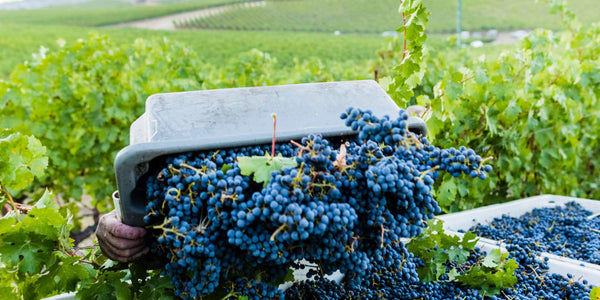
Courtney cutting grape clusters for weight estimates during the lag phase.

Feeling groovy at the company holiday party.

All smiles while working in the cellar.

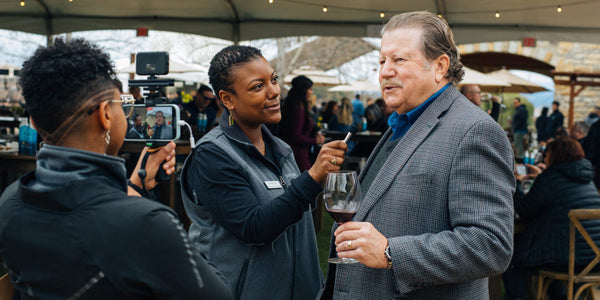
Interviewing Release Day attendees for a video.