You Should Know These Things About Older Wines
Often, a person’s favorite wine is tied to a memory—a love-filled wedding, a triumphant victory, a milestone birthday, etc. This wine becomes synonymous with this moment, and both become more cherished with each passing year. In part, this is what makes older wines extra special.
But like anything with some age on it, library wines need to be handled with a little extra care. We’ve rounded up several considerations for the next time you’re eyeing an older bottle—because the older the wine, the wiser you should be.
-
Winemaking style
No two wines are the same. Even with the same grape varieties, the chemistry of each wine is shaped by the winemaking style.
For example, the relatively lower alcohol of our Cabernets make them food-friendly, allowing for unexpected pairings like Barrel Stave Salmon. “Bright, acid-balanced Cabernets tend to age beautifully,” our Napa Valley winemaker, Laura Oskwarek, says. “This is part of the reason our wines at Silver Oak have decades long aging potential.”
-
Wine is a living thing
Like people, wines have unique characteristics that can evolve over time.
Yes, there are suggested “drink by” dates—no one wants to drink a wine past its prime—but there are certain characteristics that you can always expect from an older vintage.
“Due to the aging process, older wines can aromatically and texturally be quite different from the wine that was purchased when young,” says our former Alexander Valley winemaker, Christiane Schleussner, who recommends approaching older wines with that in mind. “You can still expect vibrancy and balance—but enjoying a wine with a little age on it is an experience of a special kind.”
Also, check for sediment on the bottom or the side of the bottle (depending on storage). With sediment, you want to be very careful and slow when decanting.
-
Size matters
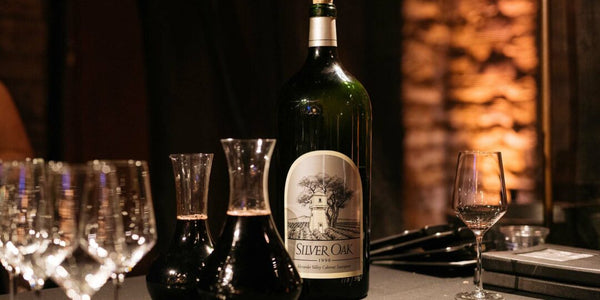
Larger format bottles have a smaller ratio of oxygen to wine volume, so expect these impressive bottles to age a little more slowly than your standard 750ml format. “This all has to do with the oxygen exchange through the cork and how the oxygen interacts with the wine,” Laura explains. “The micro-oxygen exchange through the cork when a wine is cellared develops those tertiary aromas and softens the tannin profile, which directly translates to the astringent textures you perceive when drinking.”
If you’re celebrating big, first watch How to Open a Large Format Bottle.
-
Consistency is key
The rate of aging depends on the cellaring conditions.
For example, if someone in New York City lays down a bottle of wine on their countertop wine rack, the wine won’t age well like it would in a wine fridge. Although resting a wine on its side ensures the cork doesn’t dry out and cooler temperatures can slow down the rate of aging, the fluctuation from winter temps to summer temps is significant.