How To Have Your Best Wine Tasting Ever
Drinking wine isn’t new but tasting it like a professional is a mastered skill that can be an intimidating task. To ease any nerves before your next virtual tasting or winery visit, we broke down the process into four simple steps—and included a few helpful tips, too!

1. Pick the right glass
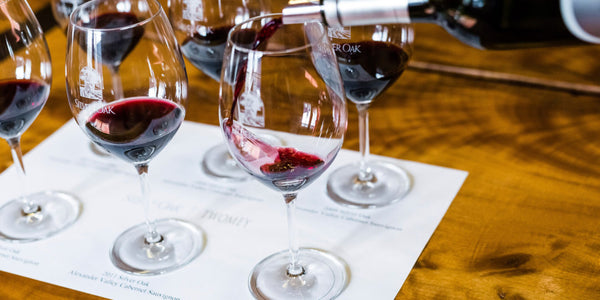
Cabernet tastes best in a large, stemmed clear glass. Holding the glass by the stem helps prevent your hand from warming up the wine, and the large bowl of the glass allows aromas to transfer from the wine to your nose.
If your wine is ever so cold that you can’t smell anything, you can hold your hands around the bowl of the glass to warm it up. This applies to white wines and red wines alike. The Twomey Sauvignon Blanc, for example, should be served (and enjoyed at!) around 49-55°F and our Cabernets around 60-65°F.

2. Look at the color of the wine
Having a clean, clear glass allows you to observe the color of your wine. Is it purple, ruby, brick red or brown? The more brown you see in your glass, the older your Cabernet may be.
When you hold your glass at a 30-degree angle, notice that difference in the color from the core to the edges. The edges of your glass will typically show a variance in color before the more concentrated center.

3. Swirl and smell
Swirl the wine in your glass. This introduces more oxygen and allows the aromas from the wine to fill your glass. Take a sniff and think about what you can smell.
A helpful way to hone in on those scents is to compartmentalize them into different categories: fruit and oak. Take a few breaths, and focus on one category before moving on to the next.

4. Taste
Your first sip of wine is used to acclimate your palate. Lightly swish it around your mouth before swallowing. Before your next sip, breathe in and take a small sip while holding your breath. Swirl this sip in your mouth, swallow and then breathe out. By activating your olfactory system (your body’s system that serves sense of smell), you will pick up on more flavors.
To examine the weight and texture of a wine, think about the consistency when you take a sip. Does the wine feel like the skim, 2% or whole milk? This describes the weight of the wine on your palate. Are there tannins—a film-like feeling on your teeth? A younger Cabernet will have grippy, firm tannins while older Cabernets may be more delicate.
Helpful Tasting Tips
If you are tasting multiple bottles, it is always okay to grab a spittoon (or spit bucket) and subtly spit out your wine after swirling and tasting. Clear minds are paramount to enjoying all that’s in your glass—or multiple glasses, if you’re tasting more than one wine!
Also, remember that water is your friend. Not only does it help you stay hydrated, but it can also help reset your palate. “I know I’m experiencing fatigue when I start questioning what I’m smelling and tasting,” says our Napa Valley Winemaker Laura Oskwarek. “That means it’s time to step away for a few minutes and drink some water. A little break gives my nose and palate a minute to reset.”